
Why Instructor Consistency Is the Real Retention Secret
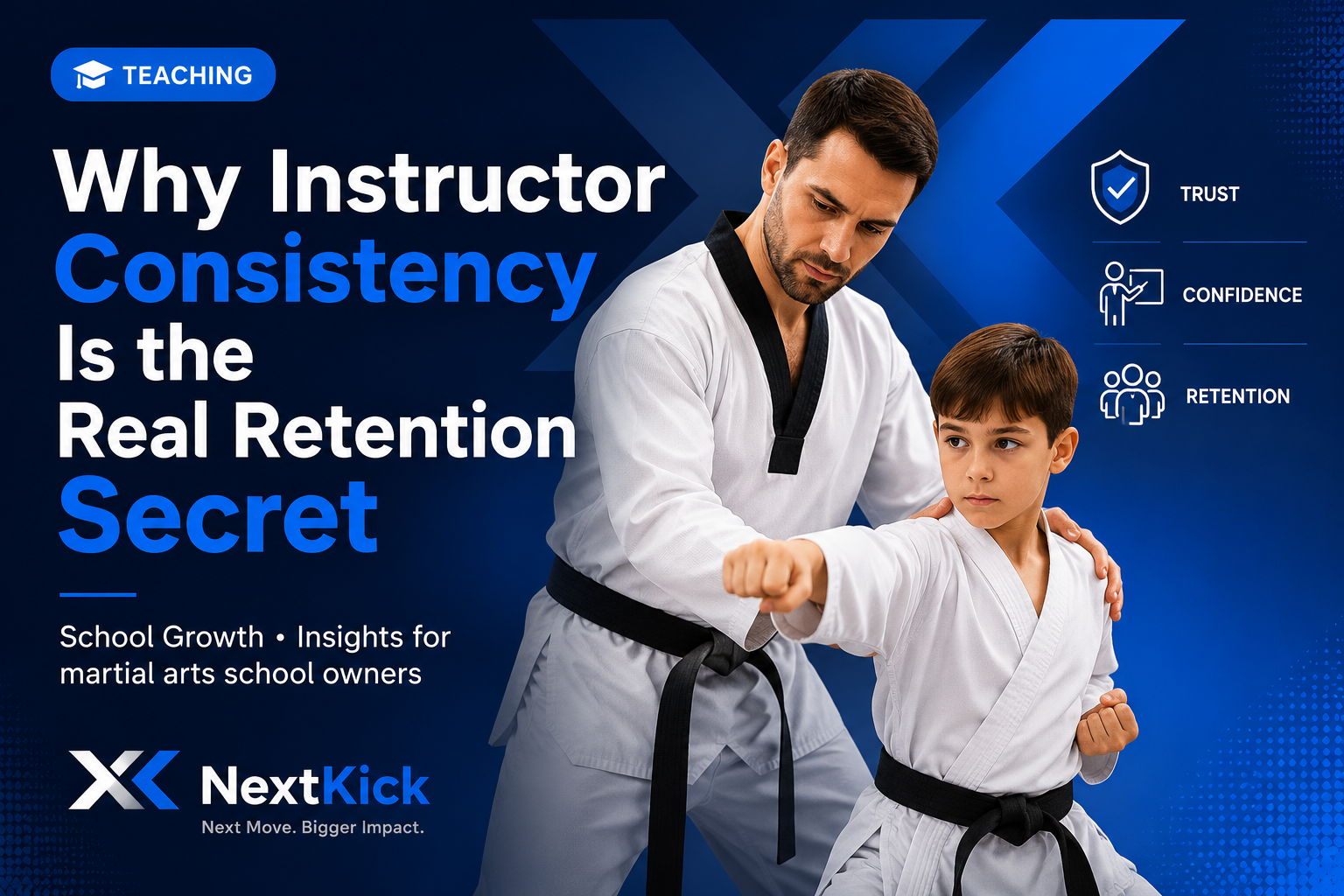
Most martial arts schools chase retention with new belts, new events, new promotions.
But the biggest driver of retention rarely gets talked about: who is actually teaching the class.
⸻
Kids Bond With People, Not Programs
Parents don't enroll their kids in "Taekwondo." They enroll them in a relationship with an instructor they trust.
When that instructor is there every week, students show up.
When the instructor keeps changing, students start to disengage — even if the curriculum stays exactly the same.
⸻
The Hidden Cost of Instructor Turnover
Every time a school swaps instructors without a plan, it pays for it twice.
• Once in the time it takes a new instructor to learn each student's name, level, and personality
• Once in the students and parents who quietly stop showing up during that transition
Most schools track billing and attendance closely. Very few track instructor consistency — even though it may matter more.
⸻
What Consistent Instruction Actually Looks Like
Consistency doesn't mean one instructor teaches every class forever.
It means:
• The same 1-2 instructors are paired with the same class blocks, week after week
• Substitutions are rare, planned, and communicated to parents in advance
• Every instructor uses the same core language, corrections, and belt standards
That last point matters more than most owners realize. A student who hears different corrections from different instructors starts to feel like the standard itself is unclear.
⸻
Systemizing What Good Instructors Already Do
The best instructors already build relationships instinctively. The problem is that this knowledge lives in their head, not in the school.
A simple system fixes this:
• Keep a shared note per student — goals, struggles, what motivates them
• Review it briefly before each class block
• Hand it off cleanly if an instructor ever does need to change
School management software makes this easy to maintain without adding admin work — student notes, attendance, and belt progress all live in one place instead of one instructor's memory.
⸻
Scheduling Around People, Not Just Slots
Most scheduling tools optimize for filling class slots. Very few optimize for keeping the same instructor in front of the same students.
When you're building your weekly schedule, treat instructor-student pairing as seriously as class capacity. A slightly less "efficient" schedule that keeps familiar faces in the room will often out-retain a perfectly optimized one that doesn't.
⸻
The schools that grow aren't the ones with the flashiest curriculum. They're the ones where a kid walks in and immediately sees someone who remembers their name, their last sparring match, and the goal they set last month.
That kind of consistency isn't luck — it's a system. And once you build it, it becomes one of the hardest things for a competitor down the street to copy.